Oleg Popov
Soviet clown who became a global circus star and goodwill ambassador.

via Wikipedia: Moscow Circus on Tsvetnoy Boulevard · see source
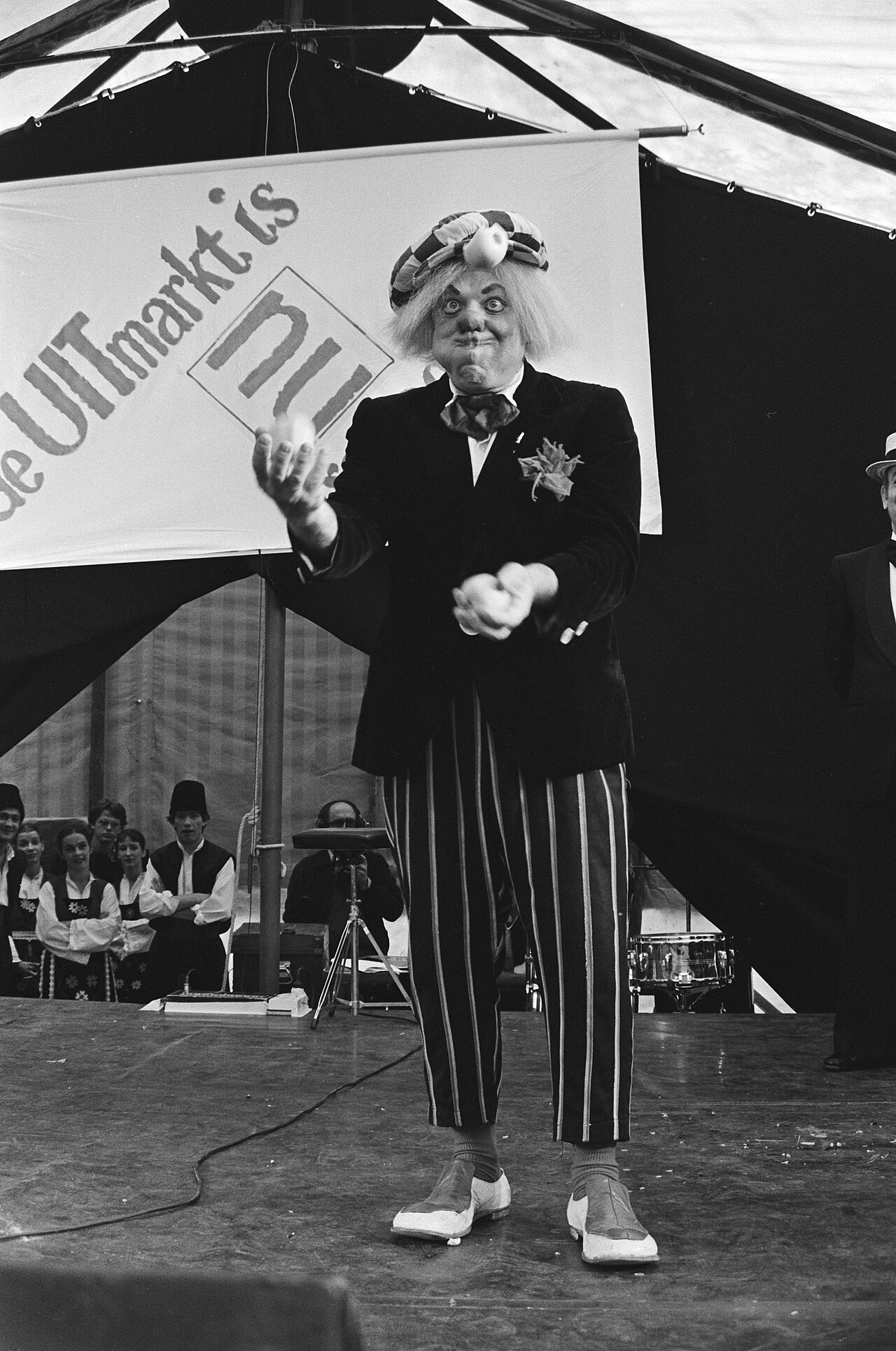
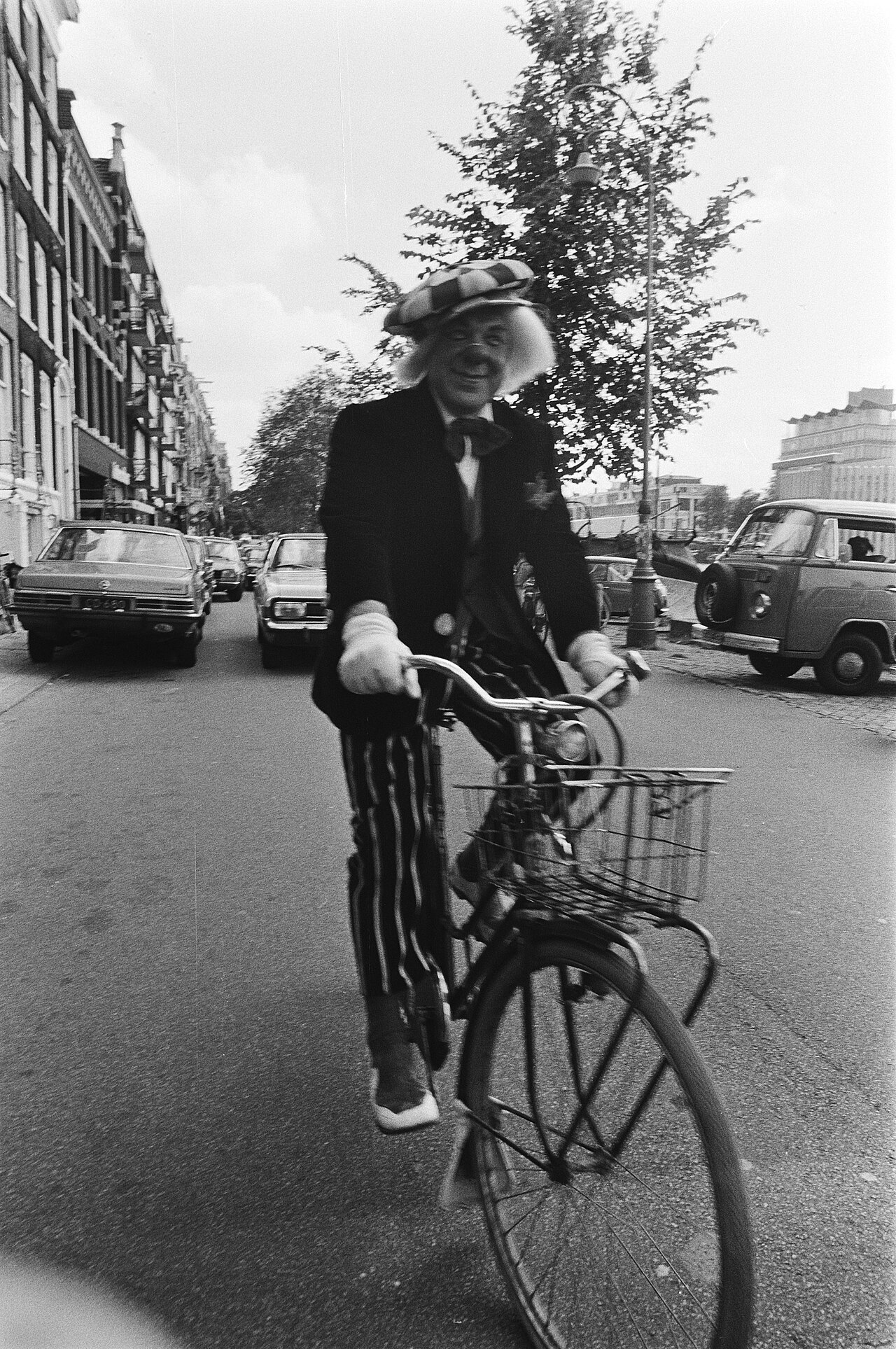
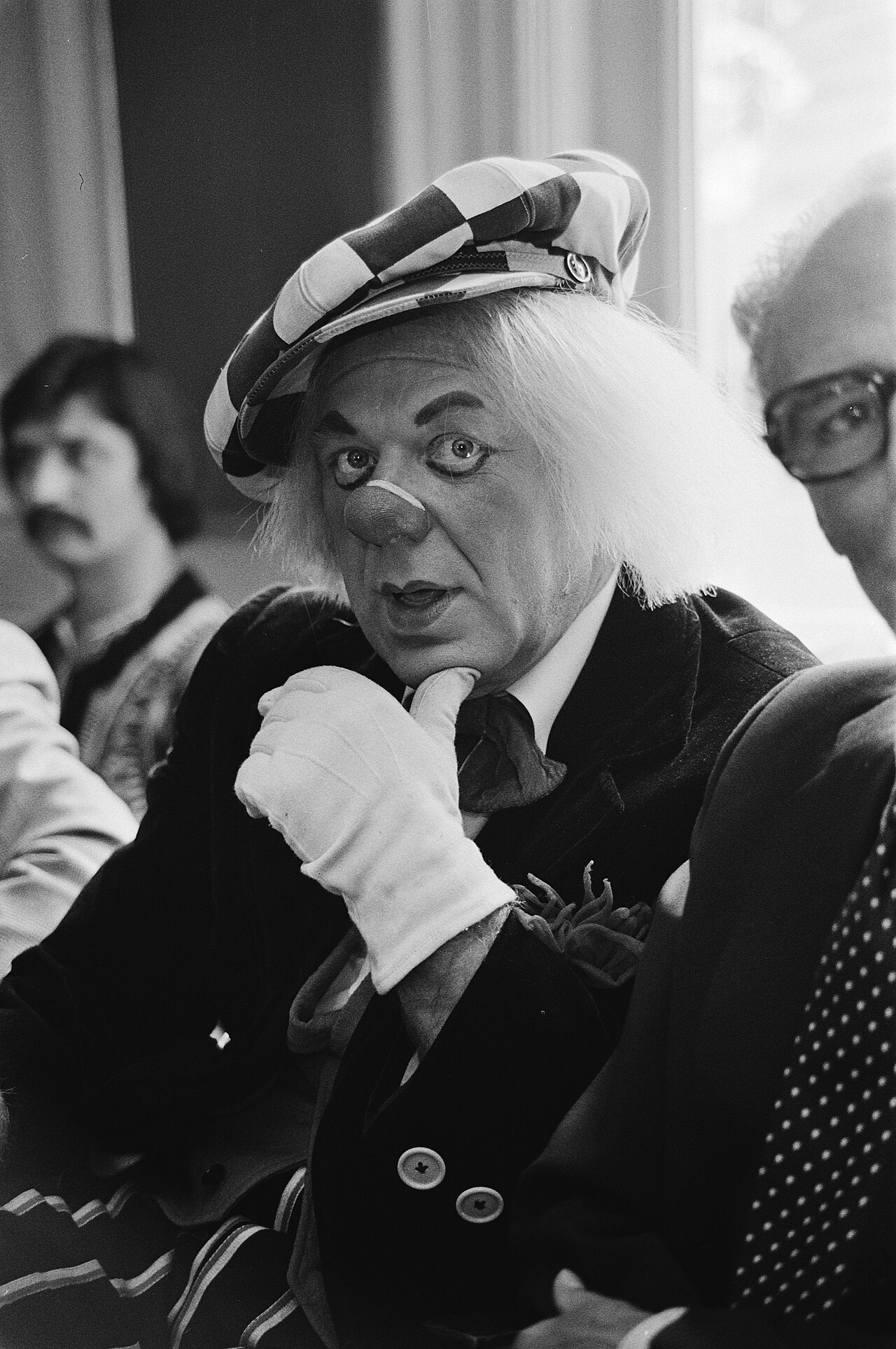
Oleg Popov was a Soviet and Russian clown and circus artist, widely recognized as one of the most famous clowns of the 20th century. He combined talents as a mime, tightrope walker, and juggler, and his character followed the tradition of the Russian folk figure Ivanushka (Ivan the Fool).
- known_for
- His clown character based on Ivanushka; Golden Clown award at the 9th International Circus Festival of Monte-Carlo in 1982
Verified Timeline
Lore & Background
Popov was born on 31 July 1930, the son of a clock-repairman. At age 12, he began working as an apprentice typographer for the newspaper Pravda and later joined its Athletic Club. In 1945, someone suggested he apply for Moscow's State College of Circus and Variety Arts (the Moscow Circus School). The press noticed him immediately, making him a circus star. The Soviet regime transformed him into a goodwill ambassador. In Australia, he was named King of Moomba in 1971. After the fall of the Soviet Union in the early 1990s, Popov toured with a unit of the Moscow Circus in Germany for several years and eventually settled there.
Reader's Guide
Oleg Popov's significance lies in his role as a cultural ambassador who bridged Soviet and international audiences through the universal language of circus. His clown persona, rooted in the Russian folk character Ivanushka, combined innocence and mischief, making him relatable across cultures. Popov's international tours in the 1950s and 1960s—including appearances at the Brussels World Fair and on American television—helped soften the image of the Soviet Union during the Cold War. His receipt of the Golden Clown award in 1981 cemented his legacy among the world's elite circus performers. After the Soviet collapse, he adapted by performing in Germany, demonstrating the enduring appeal of his art. Popov's career illustrates how circus artistry can transcend political boundaries, and his honors—including the Order of Lenin and an asteroid named after him—reflect his broad impact. His legacy endures in the history of circus as a master of physical comedy and a symbol of Soviet cultural diplomacy.
Did You Know?
- Popov was born on 31 July 1930, the son of a clock-repairman.
- At age 12, he began working as an apprentice typographer for the newspaper Pravda.
- In Australia, he was named King of Moomba in 1971.
A Clown at the Heart of Moscow
Oleg Popov was a clown who performed at the Moscow Circus on Tsvetnoi Boulevard, the sole circus operating in the capital between 1926 and 1971. Situated in the Tverskoy District of central Moscow, this venue carried a legacy stretching back to 1880, when Albert Salamonsky first raised a building on a fairground site and staged the inaugural show on October 12 of that year. By the time Popov was part of the company, the circus had passed through nationalization, wartime, and decades of Soviet state management. He is remembered in the historical record as one of the famous performers who worked at the Tsvetnoy, listed in the same breath as other celebrated clowns and a wide array of artists across disciplines. The fact that Moscow had only one circus for over four decades meant that Popov's stage was, for a generation of audiences, the only circus stage in the entire city. His name endures as part of that singular, irreplaceable institution's long roll of talent.
The State Circus Machine
When the Soviet government nationalized the Tsvetnoi Boulevard circus in 1919, it became part of a centralized system that would shape every aspect of a performer's professional life. Under the SoyuzGosTsirk department, all circus artists across the USSR were officially hired as state employees, and Popov would have worked within this framework. The early Soviet period saw the Bolsheviks attempt to reshape the circus repertoire into a vehicle for mass propaganda, a constraint that artists only managed to shake off by the 1930s. The troupe itself received the Order of Lenin in 1939, a recognition that underscored the regime's investment in the art form. From the mid-twentieth century onward, the Soviet circus earned a reputation for professionalism that was recognized internationally. For a clown like Popov, this meant performing within a highly structured, state-supported institution whose output was expected to meet exacting standards of craft, all while navigating the political currents that periodically influenced what could and could not appear in the ring.
Among the Greats
The historical record places Oleg Popov in a remarkable constellation of talent at the Tsvetnoy. He is listed alongside fellow clowns Karandash, Leonid Yengibarov, and the legendary Yuri Nikulin, who would go on to direct the circus for fifteen years after his retirement from performing in 1981. Beyond the clowning tradition, the company's roster included the illusionist Emil Kio, the performer Margarita Nazarova, the celebrated Durov family, and the puppeteer Yuri Kuklachyov. This diversity of disciplines reflects a circus that had inherited a broad artistic lineage from its founder, Albert Salamonsky, who in the 1880s had already broken convention by bringing singers, choruses, and folk ensembles into the ring alongside riders. Popov's presence among these names signals that he was regarded as part of the same tier of celebrated artists who defined the Tsvetnoy's golden age. The circus's reputation for world-class professionalism, built over decades of Soviet-era training and performance, gave each of these performers a platform of extraordinary prestige.
An Institution That Outlived Its Era
The Moscow Circus on Tsvetnoi Boulevard has a story that extends well beyond any single performer's career. After the Soviet system collapsed, the circus faced the political and economic crisis of the 1990s, a period when the entire country grappled with institutional breakdown. Under the direction of Yuri Nikulin, who had spent thirty-three years as a performer there before taking the helm in 1981, the company managed to survive those turbulent years. Nikulin worked to strip the repertoire of its lingering Soviet propaganda heritage and to welcome a fresh creative spirit into the shows. The circus, which had been the only one in Moscow for forty-five years, continued to operate on Tsvetnoi Boulevard in the Tverskoy District. Oleg Popov's name remains attached to this enduring institution, a reminder that the Tsvetnoy's legacy is built not by one era or one regime but by successive generations of artists who carried the art forward through revolution, state control, and the uncertain freedoms of the post-Soviet world.
Gallery
More in Circus & Performance Art 1-21
Spotted an error? Know more?
This is a living reference — every entry is fact-audited, and reader corrections feed straight into our audit queue. Suggest an edit · See this site's audit record