Philippe Petit
French highwire artist who walked between the Twin Towers.

via Wikipedia: Philippe Petit · see source
Philippe Petit (born 13 August 1949) is a French highwire artist who gained fame for his unauthorized highwire walks between the towers of Notre-Dame Cathedral in Paris in 1971 and of Sydney Harbour Bridge in 1973, as well as between the Twin Towers of the World Trade Center in New York City on August 7, 1974. Since then, Petit has lived in New York, where he has been artist-in-residence at the Cathedral of St. John the Divine, another site of his aerial performances. He has done wire walking as part of official celebrations in New York, across the United States, and in France and other countries, as well as teaching workshops on the art.
- born
- 13 August 1949
- field
- Highwire artist
- nationality
- French
- known_for
- Unauthorized highwire walks between the Twin Towers of the World Trade Center (1
Verified Timeline
Lore & Background
Petit was born in Nemours, Seine-et-Marne, France; his father Edmond Petit was an author and an Army Pilot. At an early age, Petit discovered magic and juggling. He loved to climb, and at 16, he took his first steps on a tightrope wire. He told a reporter, 'Within one year, I taught myself to do all the things you could do on a wire. I learned the backward somersault, the front somersault, the unicycle, the bicycle, the chair on the wire, jumping through hoops. But I thought, "What is the big deal here? It looks almost ugly." So I started to discard those tricks and to reinvent my art.' In June 1971, Petit secretly installed a cable between the two towers of Notre-Dame de Paris. On the morning of 26 June 1971, he 'juggled balls' and 'pranced back and forth' as he crossed the wire on foot to the applause of the crowd below. In 1973, he walked a wire rigged between the two north pylons of the Sydney Harbour Bridge. Petit conceived his 'coup' when he was 18, when he first read about the proposed construction of the Twin Towers and saw drawings of the project in a magazine he read in 1968 while sitting at a dentist's office. What was called the 'artistic crime of the century' took Petit six years of planning. On the night of Tuesday, 6 August 1974, Petit and his crew had a lucky break and got a ride in a freight elevator to the 104th floor with their equipment. Shortly after 8 am local time on 7 August, Petit stepped out on the wire and started to perform. He was 1,350 feet (410 m) above the ground. He performed for 45 minutes, making eight passes along the wire, during which he walked, danced, lay down on the wire, and knelt to salute watchers. When New York Police Department and Port Authority Police Department police officers learned of his stunt, they came up to the roofs of both buildings to try to persuade him to leave the wire. Feeling that he had 'trespassed long enough into these forbidden regions', and because the wire was starting to become dangerous to walk on due to rain, Petit left the wire and surrendered to the police. Since then, Petit has lived in New York, where he has been artist-in-residence at the Cathedral of St. John the Divine. He also became adept at equestrianism, juggling, fencing, carpentry, rock-climbing, and bullfighting. Spurning circuses and their formulaic performances, he created his street persona on the sidewalks of Paris.
Reader's Guide
Philippe Petit's 1974 highwire walk between the Twin Towers is credited with bringing the towers much-needed attention and even affection, as they initially had been unpopular. Critics such as historian Lewis Mumford had regarded them as ugly and utilitarian in design, and too large a development for the area. The Port Authority was having trouble renting out all of the office space. The Port Authority of New York and New Jersey gave Petit a lifetime pass to the Twin Towers' observation deck. He autographed a steel beam close to the point where he began his walk, which was later destroyed in the September 11 attacks. Petit's stunt was the subject of the 2008 documentary Man on Wire, directed by James Marsh, which won numerous awards including the 2009 Academy Award for Best Documentary Feature. The Walk, a film based on Petit's walk, was released in September 2015, starring Joseph Gordon-Levitt as Petit and directed by Robert Zemeckis. Petit was also the subject of a children's book and an animated adaptation of it, released in 2005. Petit's career exemplifies unauthorized public performance as a form of art, blending circus skill with architectural daring.
Did You Know?
- Petit conceived his World Trade Center walk at age 18 after seeing drawings of the towers in a magazine at a dentist's office in 1968.
- On the night of 6 August 1974, Petit and his crew rode a freight elevator to the 104th floor with their equipment.
- Petit performed for 45 minutes, making eight passes along the wire 1,350 feet above the ground.
- The Port Authority of New York and New Jersey gave Petit a lifetime pass to the Twin Towers' observation deck.
- Petit autographed a steel beam close to the point where he began his walk, which was later destroyed in the September 11 attacks.
Early Life & the Reinvention of an Art
Born in Nemours, Seine-et-Marne, France on 13 August 1949, Philippe Petit grew up in a household shaped by his father Edmond, an author and Army pilot. At an early age, Petit discovered magic and juggling. He loved to climb, and at 16, he took his first steps on a tightrope wire. He told a reporter, 'Within one year, I taught myself to do all the things you could do on a wire. I learned the backward somersault, the front somersault, the unicycle, the bicycle, the chair on the wire, jumping through hoops. But I thought, "What is the big deal here? It looks almost ugly." So I started to discard those tricks and to reinvent my art.' He also became adept at equestrianism, juggling, fencing, carpentry, rock-climbing, and bullfighting. Spurning circuses and their formulaic performances, he created his street persona on the sidewalks of Paris.
The Unauthorized Walks: Notre-Dame and Sydney
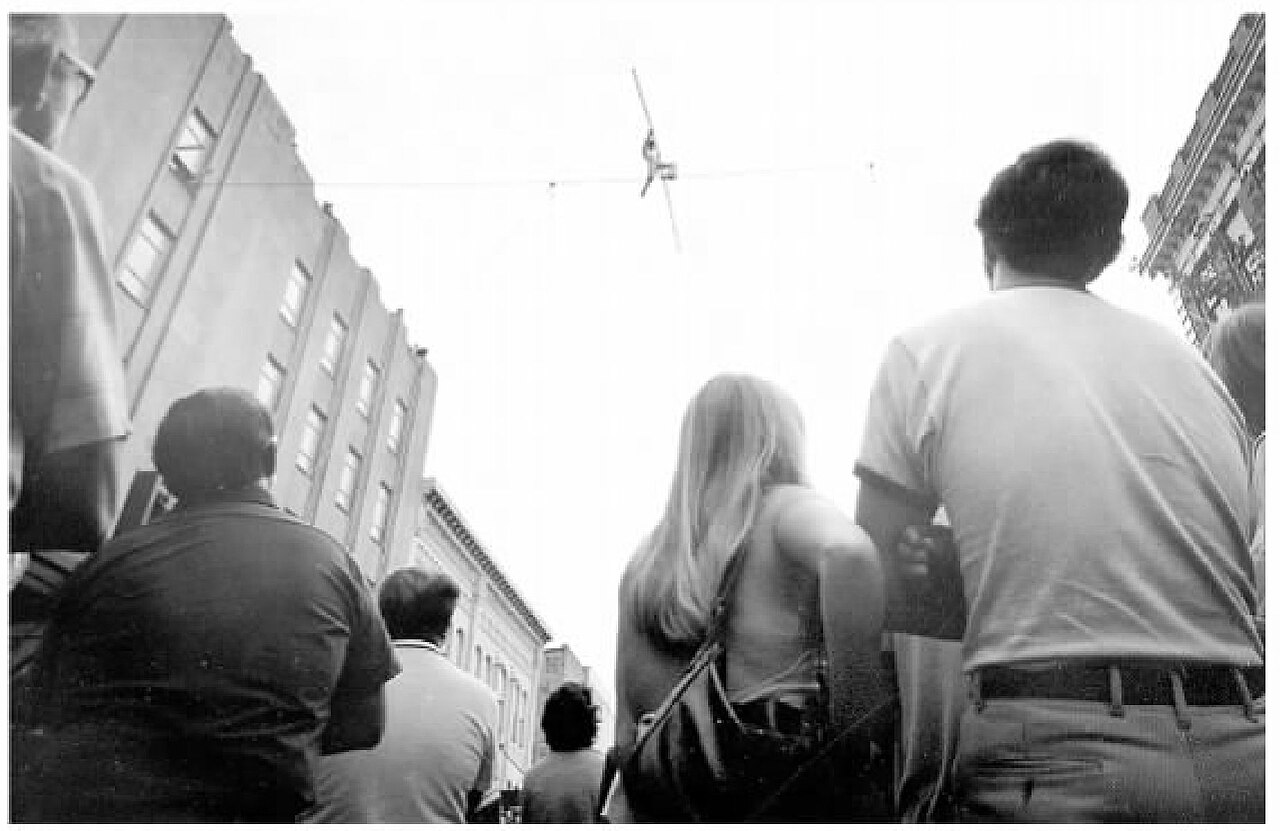
Before the Twin Towers, Petit established his reputation through two bold, unauthorized crossings. In June 1971, Petit secretly installed a cable between the two towers of Notre-Dame de Paris. On the morning of 26 June 1971, he 'juggled balls' and 'pranced back and forth' as he crossed the wire on foot to the applause of the crowd below, while priests were being ordained inside the building. Two years later, in 1973, he walked a wire rigged between the two north pylons of the Sydney Harbour Bridge. In each case he operated as a combination of circus act and public display. In the early 1970s, he visited New York City, where he frequently juggled and worked on a slackline in Washington Square Park, building the local familiarity that would later make his most ambitious project conceivable.
Six Years in the Making: The Twin Towers Walk
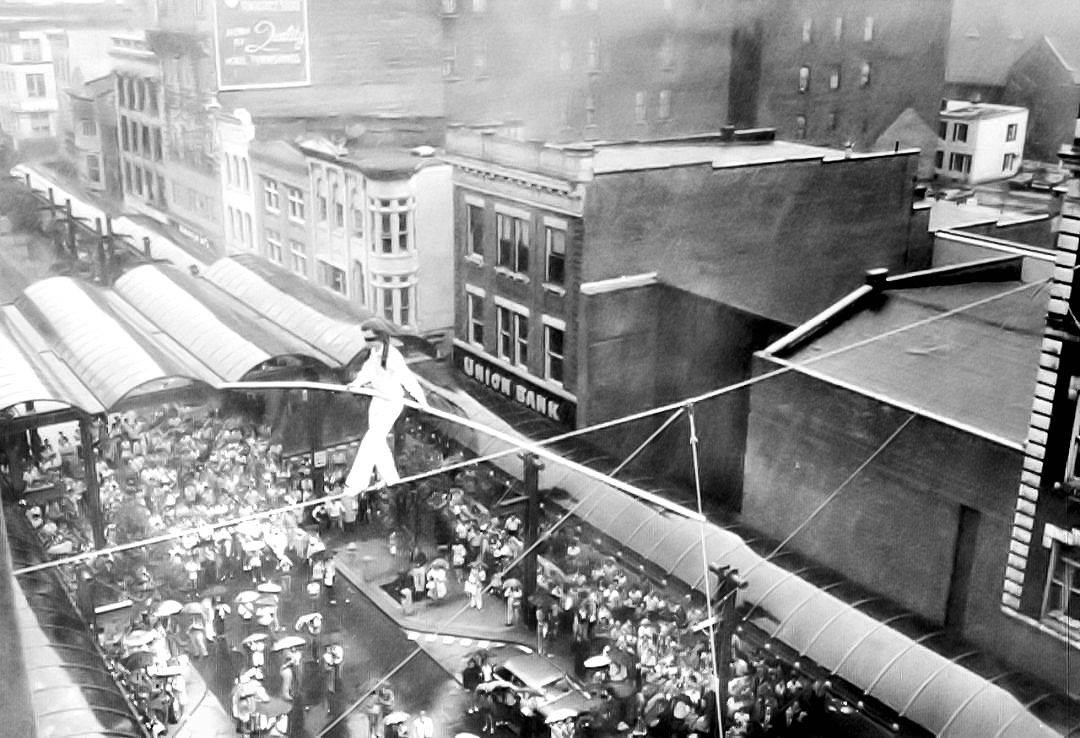
Petit first conceived his 'coup' at eighteen, in 1968, when he saw drawings of the proposed World Trade Center towers in a magazine at a dentist's office. What was called the 'artistic crime of the century' took Petit six years of planning. He had to learn how to accommodate issues such as the swaying of the high towers due to wind, effects of wind and weather on the wire at that height, how to rig a 200-foot (61 m) steel cable across the 138-foot (42 m) gap between the towers (at a height of 1,368 feet (417 m)), and how to gain entry with his collaborators. Collaborators included New York-based photographer Jim Moore, who helped take aerial photographs from a rented helicopter, and Jean François Heckel and Jean-Louis Blondeau, who practiced with him in a field in France and accompanied him for final rigging. Francis Brunn, a German juggler, provided financial support. The team made repeated incursions into the unfinished towers, hiding on upper floors to study security. Petit fabricated fake identification cards, claiming they were contractors installing an electrified fence. On the night of Tuesday, 6 August 1974, they rode a freight elevator to the 104th floor with their equipment. To pass the cable across the void, they used a bow and arrow attached to monofilament, attached to a rope. The team was delayed when the heavy cable sank too fast, and had to be pulled up manually for hours. Shortly after 8 am local time on 7 August, Petit stepped out on the wire 1,350 feet (410 m) above the ground. He performed for 45 minutes, making eight passes along the wire, during which he walked, danced, lay down on the wire, and knelt to salute watchers. Office workers, construction crews, and policemen cheered him on. When police learned of his stunt, they came up to the roofs to try to persuade him to leave the wire. Feeling that he had 'trespassed long enough into these forbidden regions', and because rain was making the wire dangerous, Petit left the wire and surrendered to the police.
Legacy: From the Wire to the Screen
Since the 1970s, Petit has lived in New York, where he has been artist-in-residence at the Cathedral of St. John the Divine, another site of his aerial performances. He has done wire walking as part of official celebrations in New York, across the United States, and in France and other countries, as well as teaching workshops on the art. His story has also found powerful life on screen. In 2008, James Marsh directed Man on Wire, a documentary about Petit's walk between the towers, which won numerous awards including the 2009 Academy Award for Best Documentary Feature. A narrative feature, The Walk, was released in September 2015, directed by Robert Zemeckis and starring Joseph Gordon-Levitt as Petit. Petit was also the subject of a children's book and an animated adaptation of it, released in 2005. Together, these works have cemented his image as an artist whose single, impossible act of balance became a cultural touchstone.
Gallery

More in Circus & Performance Art 1-21
Spotted an error? Know more?
This is a living reference — every entry is fact-audited, and reader corrections feed straight into our audit queue. Suggest an edit · See this site's audit record